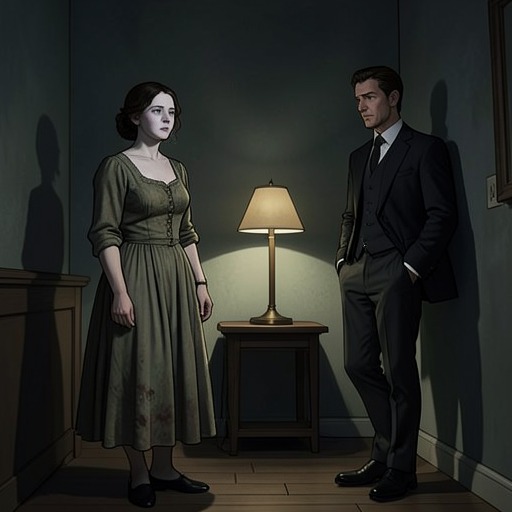
Alice Worcester
Los renglones torcidos de DiosAlice Worcester is Alice Gould’s mother, but the story presents her chiefly as an absence shaped into an ideal. She died when Alice was very young, leaving her daughter with almost no personal knowledge of her; the image that endured was largely formed by Alice’s father, whose praise made Alice Worcester a standard for the person his daughter should become.
Identity and the limits of memory
Alice says that she knows very little about her mother, except that she was very beautiful. Alice Worcester died while Alice Gould was still a small child, so their relationship cannot be described through remembered conversations, shared experiences, or a sustained maternal influence. The account offers no further particulars about Alice Worcester’s life or character beyond the beauty attributed to her and the importance she acquired in her daughter’s upbringing.
The family’s maternal branch is also absent from Alice’s account: asked whether she has relatives on that side, she answers that she has none. This detail reinforces how little independent family history surrounds Alice Worcester. She is not introduced through a wider maternal kinship network or through stories from other relatives; in the evidence available, her presence reaches her daughter principally through the father who remembered and praised her.
The portrait made by her husband
Alice describes her father as an exceptional educator and says that, as time passes, his figure grows larger within her. His treatment of Alice Worcester helps explain that influence. He spoke of his wife with tenderness and sincere admiration, and he presented her to their daughter as a model of perfection. The mother Alice could not substantially know in life thus became vivid through a repeated act of paternal description.
That portrait was not merely affectionate recollection. When correcting Alice, her father would invoke what her mother would or would not have said or done. The comparison linked ordinary moments of discipline to Alice Worcester’s imagined judgment. Her memory was made active in the household not by a visible presence, but by the father’s use of her as a moral measure: an appeal to what Alice ought to say or do.
An ideal for Alice Gould
Alice says that this comparison did not irritate or wound her, despite the fact that she had hardly known the woman being held up as her example. She did not regard her mother’s idealized status as a rival to her own place in her father’s affections, and she denies feeling jealous of his love for Alice Worcester. Instead, she understood her mother as an ideal she was meant to reach.
The qualities named in that aspiration are dignity, goodness, and strength. Alice’s father, as she recounts it, made Alice Worcester the model to imitate if his daughter wished to become worthy, kind, and strong. The account therefore distinguishes the mother’s actual, sparsely known life from the moral role assigned to her. It does not establish that Alice Worcester personally embodied every perfection attributed to her; it shows that Alice Gould received her as the sum of those perfections through her father’s teaching.
Narrative significance
Alice Worcester’s importance lies in the gap between biography and inheritance. Alice Gould cannot offer a substantial store of memories about her mother, yet her mother remains consequential because the father’s praise gave that absence a durable form. The repeated comparisons made Alice Worcester part of her daughter’s internal standard for conduct, even though the daughter’s knowledge of her was slight.
This account also qualifies any simple opposition between what a child inherits and what she is taught. In describing her father’s influence, Alice distinguishes receiving qualities from him from inheriting them biologically; her recollection of her mother then shows how education can transmit an ideal of someone who is no longer present. Alice Worcester’s legacy in the narrative is consequently neither a developed personal history nor a direct maternal bond. It is a carefully mediated image—tenderly remembered by her husband and adopted by her daughter as a guide to the person she should become.